South Africa’s post-collision repair capacity under structural pressure – SAMBRA


South Africa’s post-collision repair sector is entering a period of structural strain that could have far-reaching implications for insurers, manufacturers and consumers alike, warns the South African Motor Body Repairers’ Association (SAMBRA).
SAMBRA says that sustained economic pressure on small and medium-sized motor body repairers (MBRs) is beginning to erode the foundations of the country’s automotive repair ecosystem.
At the centre of the repair industry sits an interdependent value chain, explains the association.
Original-equipment manufacturers (OEMs, or car manufacturers) define repair specifications; motor body repairers execute these repairs to exacting standards; and insurers fund the claims process that enables restoration.
When aligned, this model protects vehicle safety, brand integrity and insurance claims stability.
However, according to SAMBRA national director Juan Hanekom, the balance between these elements is tightening.
“Most motor body repairers in South Africa are independent micro and small enterprises.
“They are required to make significant capital investments in equipment, training and compliance to meet modern OEM standards, yet they operate in an environment of increasing cost containment and margin compression.
“This gap is where the pressure is intensifying.”
Modern vehicles have evolved dramatically in recent years, explains Hanekom.
Advanced driver-assistance systems, lightweight composite materials, complex structural designs and new- energy-vehicle technologies have transformed what was once a largely mechanical repair function into a highly technical, calibration-intensive discipline, much like trading the hammer for a computer.
Correct repair now demands specialised tooling, continuous upskilling, dedicated infrastructure and strict adherence to manufacturer protocols.
At the same time, insurers are navigating their own pressures, such as rising claims frequency and severity, inflationary input costs and heightened consumer sensitivity around premiums.
In this constrained environment, cost control becomes a priority.
However, the sustained downward pressure on repair margins, combined with extended payment cycles and rising compliance obligations, are all placing strain on repair capacity.
“The industry must recognise that repair capacity is not infinite,” cautions Hanekom.
“If independent repairers begin to reduce investment, scale back operations, or exit the market, the consequences will ripple across the value chain, resulting in longer turnaround times, regional access gaps, increased claims inflation and greater systemic risk.”
Unlike large dealership networks, many MBRs are regionally embedded small businesses employing skilled artisans, apprentices and support staff.
They provide critical repair access in smaller towns and peri-urban areas where alternative capacity is limited.
Their sustainability is, therefore, not only a commercial matter, but an economic as well as safety consideration.
“When compliant repair capacity shrinks, consumers feel it first,” says Hanekom.
“Vehicles remain off the road longer, service levels decline and the risk of substandard repairs entering the system increases. Ultimately, this becomes a consumer safety issue.
“It is only when industry comes together and acknowledges the challenges the interdependent value chain are facing that meaningful and sustainable solutions can be found,” notes Hanekom.
He stresses that the industry must acknowledge its shared interdependence.
OEMs rely on compliant repairs to protect brand integrity.
Insurers rely on stable, high- quality repair networks to manage claims risk.
Repairers rely on realistic economic structures to sustain investment.
Weakening any corner of that triangle destabilises the whole, says Hanekom.
To mitigate long-term risk, SAMBRA is advocating for the establishment of an Industry Sustainability Forum, comprising key stakeholders.
Article Enquiry
Email Article
Save Article
Feedback
To advertise email advertising@creamermedia.co.za or click here
Research Reports

Projects


Latest Multimedia
Latest News


Showroom
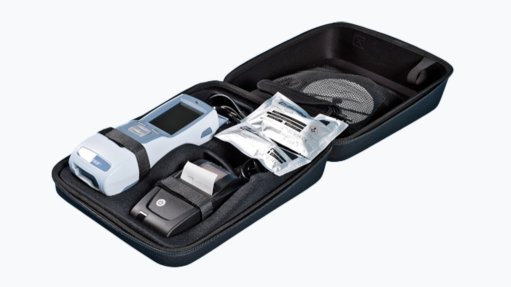
Developed to exceed the latest EN 15964 standards for police breathalysers proving that it will remain accurate and reliable for many years to come.
VISIT SHOWROOM
Supplier & Distributor of the Widest Range of Accurate & Easy-to-Use Alcohol Breathalysers
VISIT SHOWROOM


Press Office
Announcements
What's On
Subscribe to improve your user experience...
Option 1 (equivalent of R125 a month):
Receive a weekly copy of Creamer Media's Engineering News & Mining Weekly magazine
(print copy for those in South Africa and e-magazine for those outside of South Africa)
Receive daily email newsletters
Access to full search results
Access archive of magazine back copies
Access to Projects in Progress
Access to ONE Research Report of your choice in PDF format
Option 2 (equivalent of R375 a month):
All benefits from Option 1
PLUS
Access to Creamer Media's Research Channel Africa for ALL Research Reports, in PDF format, on various industrial and mining sectors
including Electricity; Water; Energy Transition; Hydrogen; Roads, Rail and Ports; Coal; Gold; Platinum; Battery Metals; etc.
Already a subscriber?
Forgotten your password?
Receive weekly copy of Creamer Media's Engineering News & Mining Weekly magazine (print copy for those in South Africa and e-magazine for those outside of South Africa)
➕
Recieve daily email newsletters
➕
Access to full search results
➕
Access archive of magazine back copies
➕
Access to Projects in Progress
➕
Access to ONE Research Report of your choice in PDF format
RESEARCH CHANNEL AFRICA
R4500 (equivalent of R375 a month)
SUBSCRIBEAll benefits from Option 1
➕
Access to Creamer Media's Research Channel Africa for ALL Research Reports on various industrial and mining sectors, in PDF format, including on:
Electricity
➕
Water
➕
Energy Transition
➕
Hydrogen
➕
Roads, Rail and Ports
➕
Coal
➕
Gold
➕
Platinum
➕
Battery Metals
➕
etc.
Receive all benefits from Option 1 or Option 2 delivered to numerous people at your company
➕
Multiple User names and Passwords for simultaneous log-ins
➕
Intranet integration access to all in your organisation